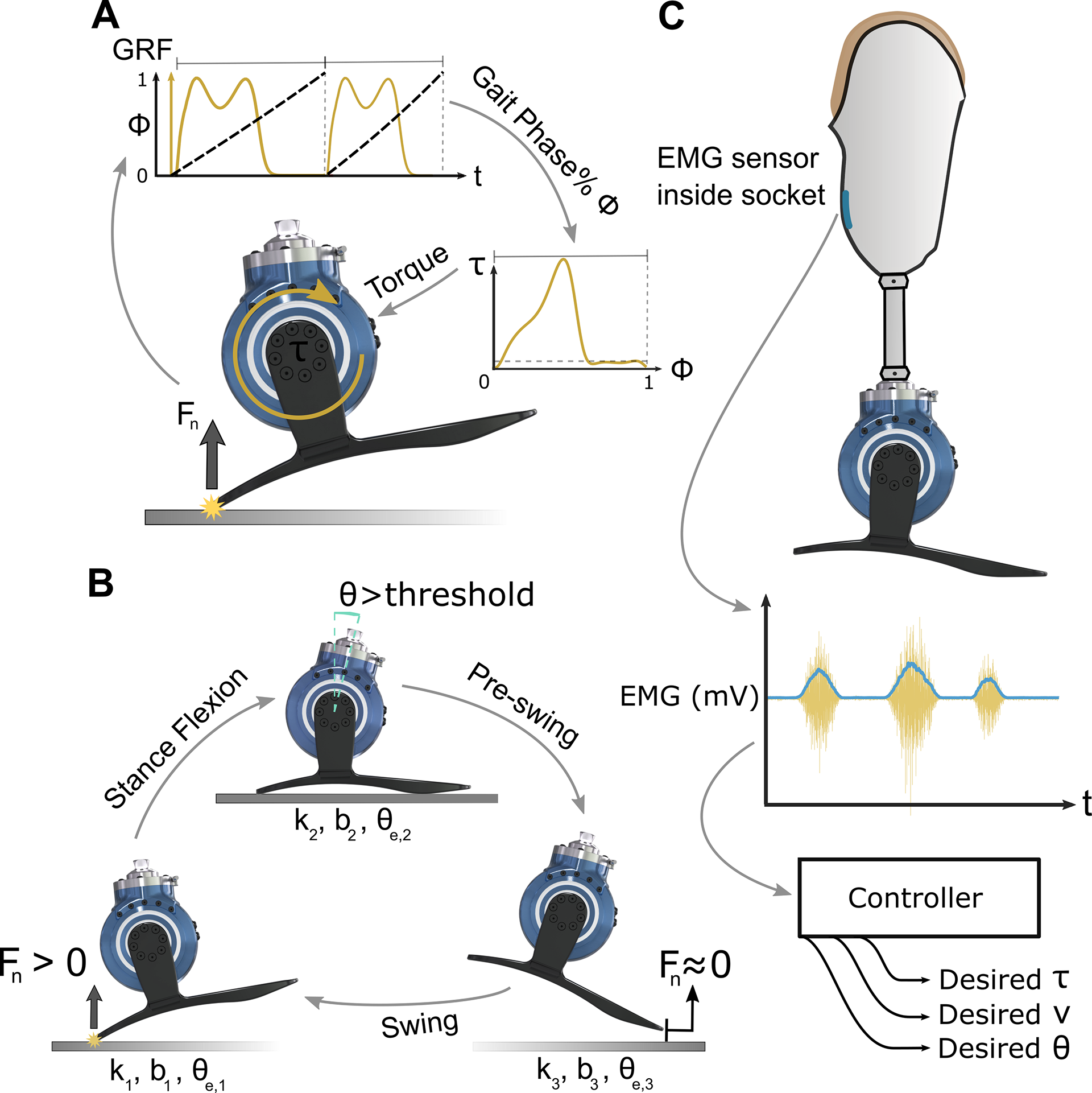
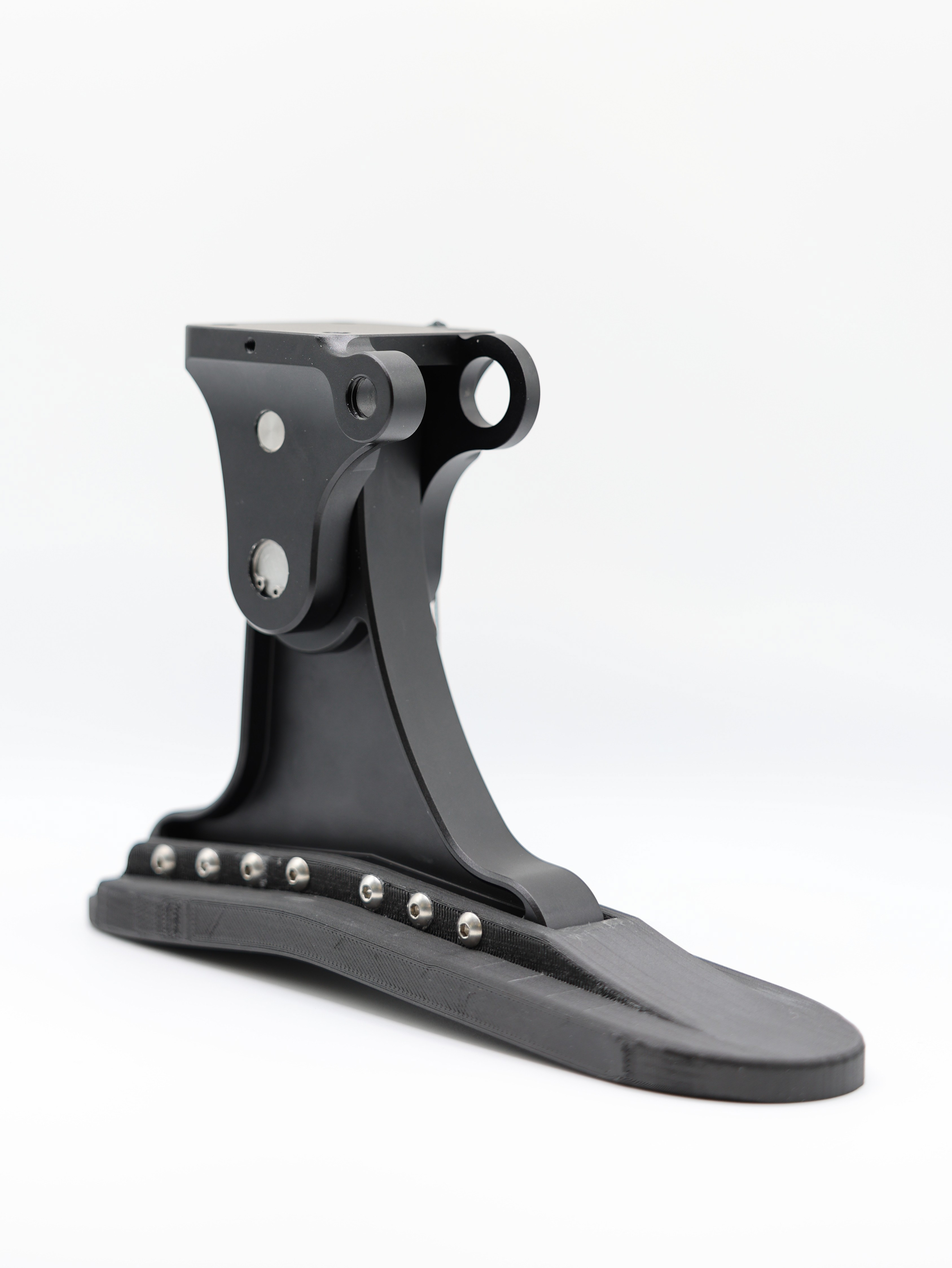
Normative gait requires significant energy to be injected into the ankle during fast walking, uphill walking, running, and jumping, and passive prostheses are limited in their ability to emulate these kinetics and kinematics. Powered ankles were developed to address that deficiency, but commercially available devices have seen limited clinical adoption because the benefits of added power largely fail to justify the added noise, weight, maintenance, and cost. Studies to date show mixed results with respect to biomechanical or energetic improvements. As mechatronics technology and control approaches advance, however, the viability of active devices continues to increase.
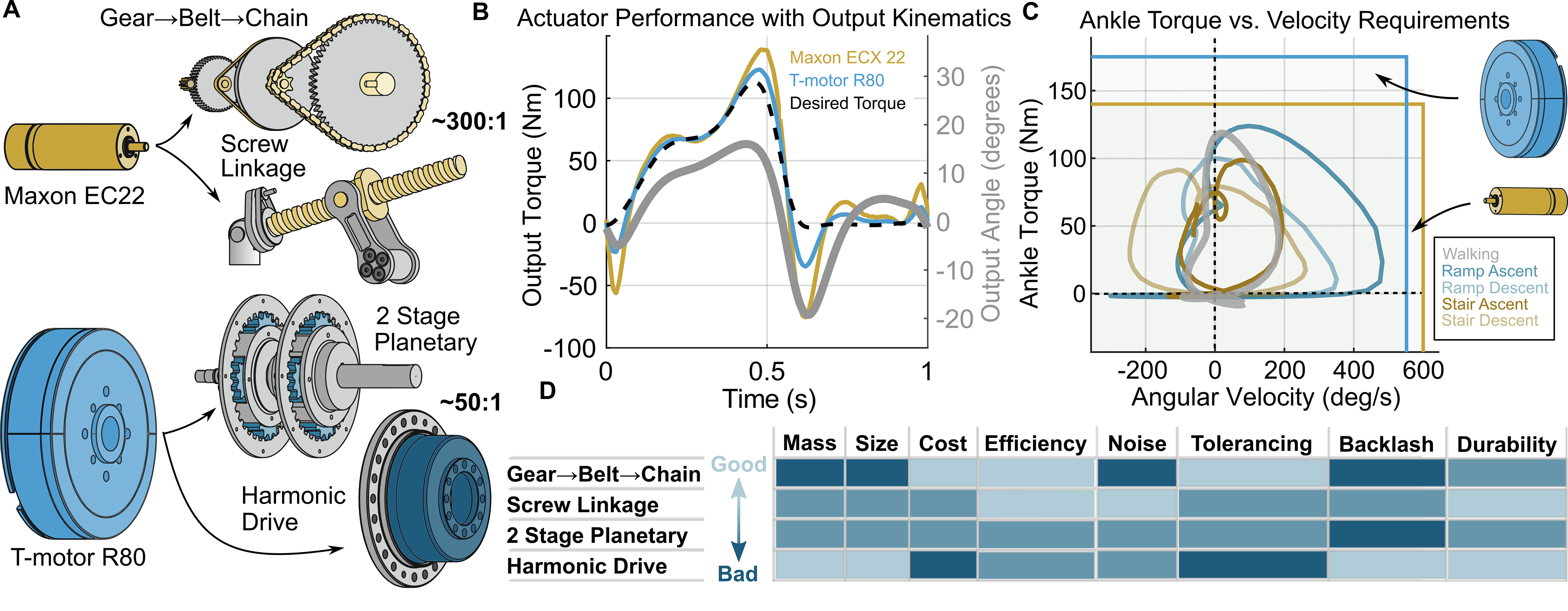
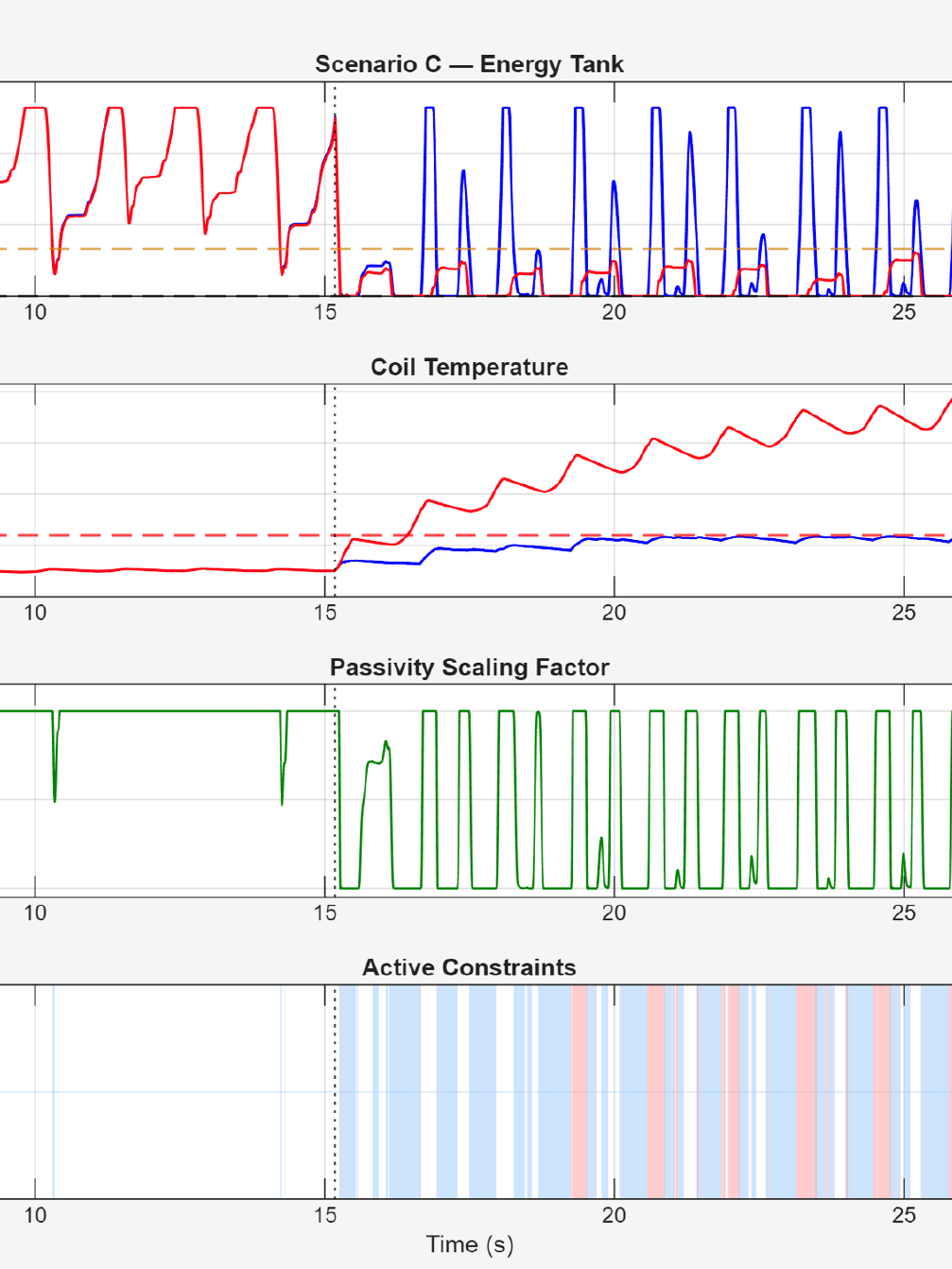
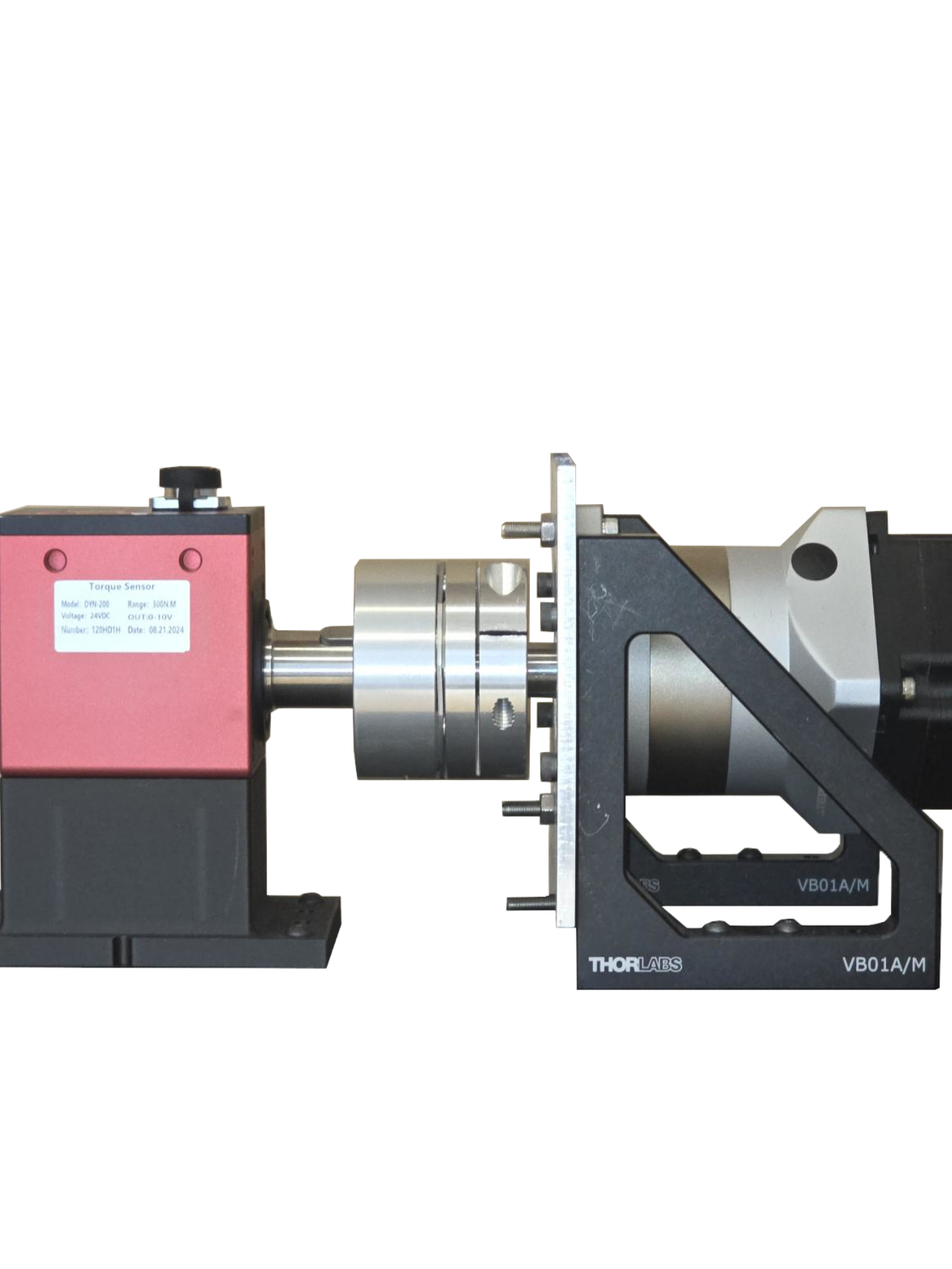
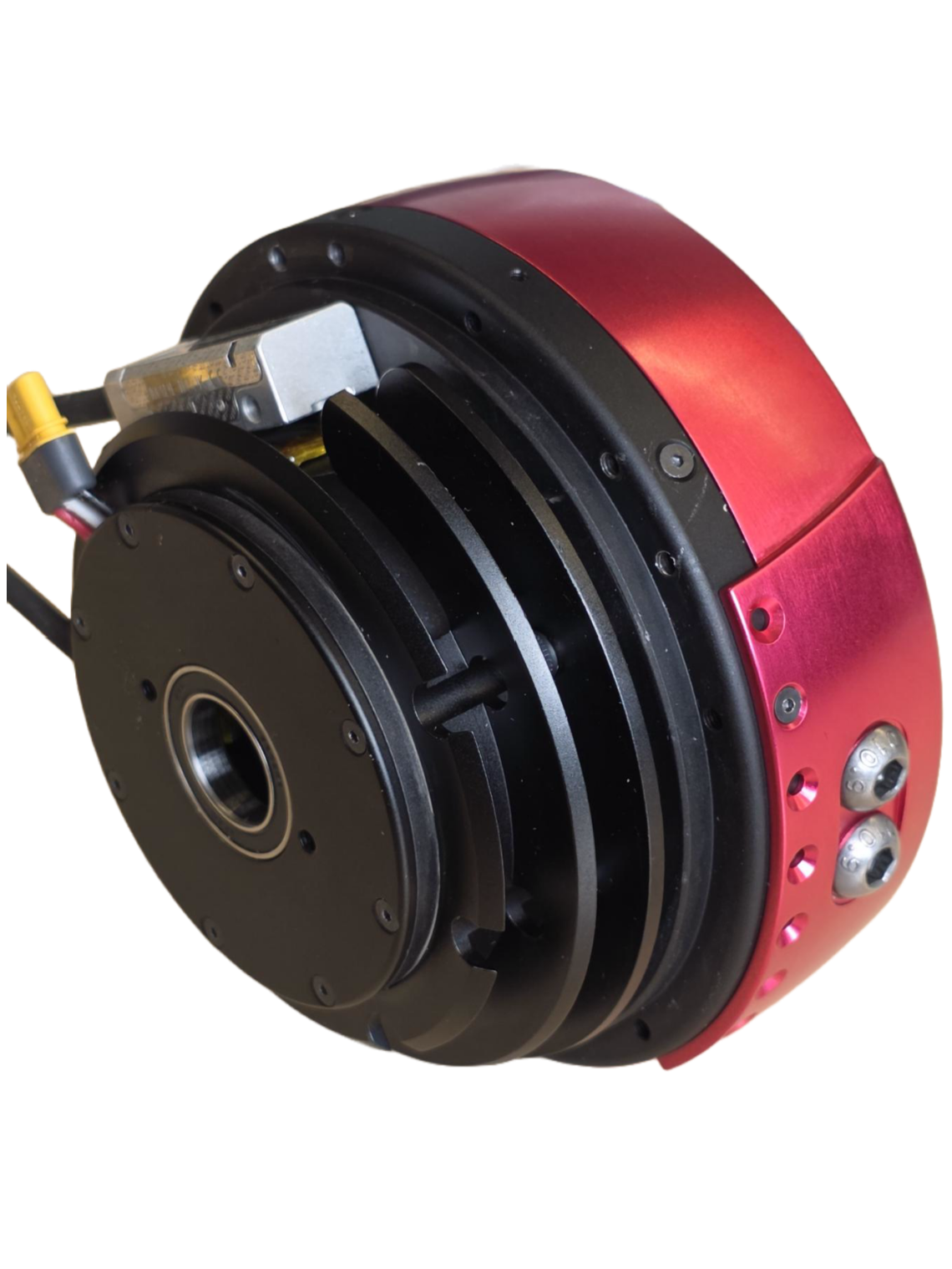
Almost all powered prostheses rely on electromagnetic motors, which have much higher speed and lower torque than the biological muscles they replace, so a transmission is required and the two are typically co-designed. Brushless DC motors dominate the field for their robustness, low noise, and high torque density. Motor torque is proportional to current and limited primarily by heat, though motors can tolerate brief periods above their nominal current rating, which makes over-currenting common in prosthetic ankles since peak torque is only needed during push off. A key constraint is reflected inertia: rotor inertia felt at the output scales with the square of the transmission ratio, so a small motor behind a 300:1 reduction feels 90,000 times more resistant to acceleration at the joint. Quasi-direct-drive designs use larger diameter motors and much lower ratios to reduce this effect, at the cost of added motor size and mass.
Transmission selection balances mechanical advantage, weight, robustness, efficiency, cost, noise, and packaging. Prismatic elements such as lead, roller, and ball screws are force dense and package well inside the form factor of an ankle, and linkages paired with them can create non-constant mechanical advantage that favors human biomechanics by delivering high torque at specific angles. Rotary-to-rotary elements offer a wider range of ratios but tend to be larger in diameter: gears and belts reach roughly 5:1 with limited peak torque, planetary reducers reach about 9:1 in a compact package, and cycloidal and strain-wave gears reach 30:1 to 100:1 at high torque with added complexity and cost.
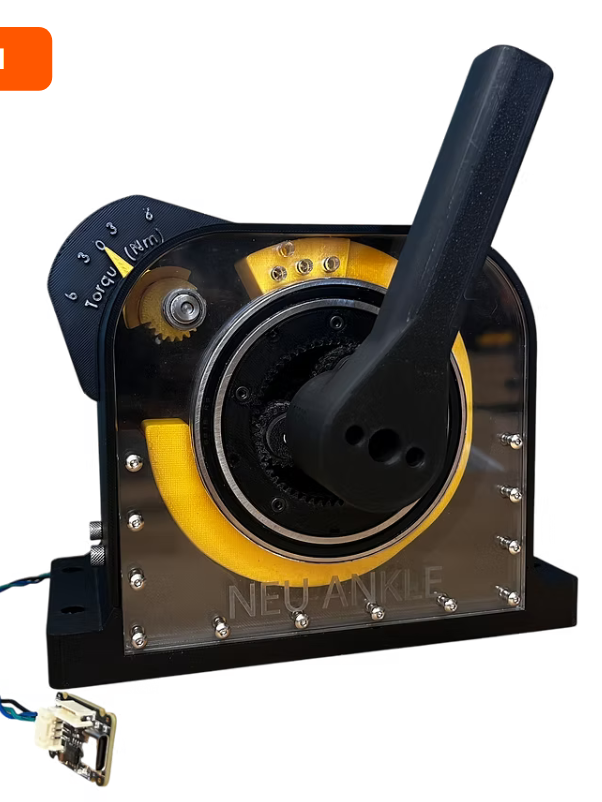
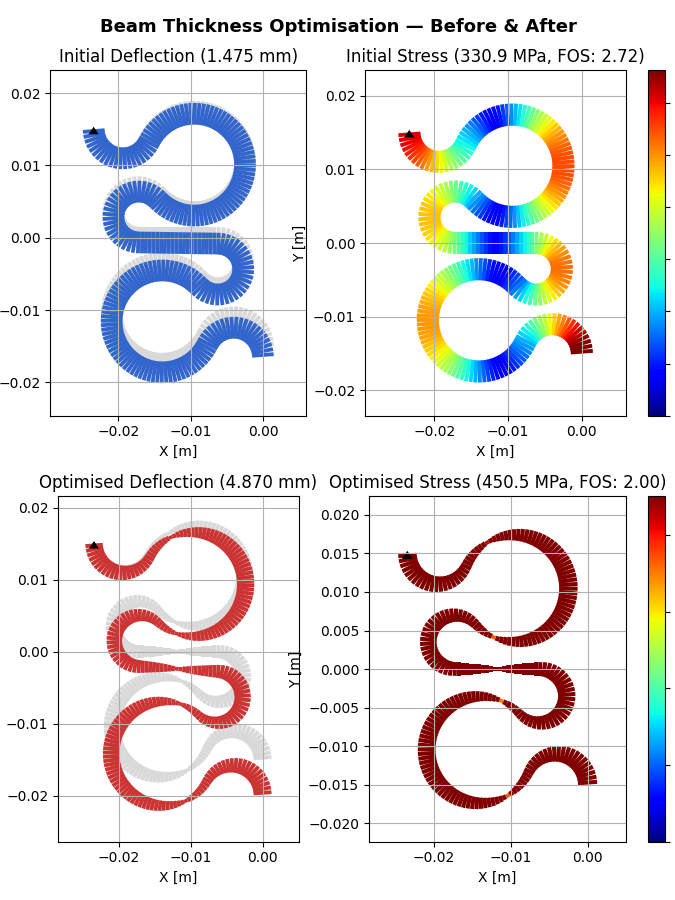
Adding a spring in series with the transmission changes the actuator's dynamics and opens up new control paradigms. A stiff actuator generates large force spikes on contact and requires high feedback gains that induce contact instability, while a series elastic actuator deflects its spring in a controlled and measurable way so the loop can be closed around that deflection. The trade-off is reduced large-force bandwidth in exchange for better disturbance rejection, which is usually favorable for prosthetics, though the approach demands extra sensing and springs that are large and heavy. Springs in parallel with the actuator can instead offload actuator torque and allow the motor to be downsized, but their usefulness depends on engagement direction and rest angle, and in some tasks the motor has to fight the spring.