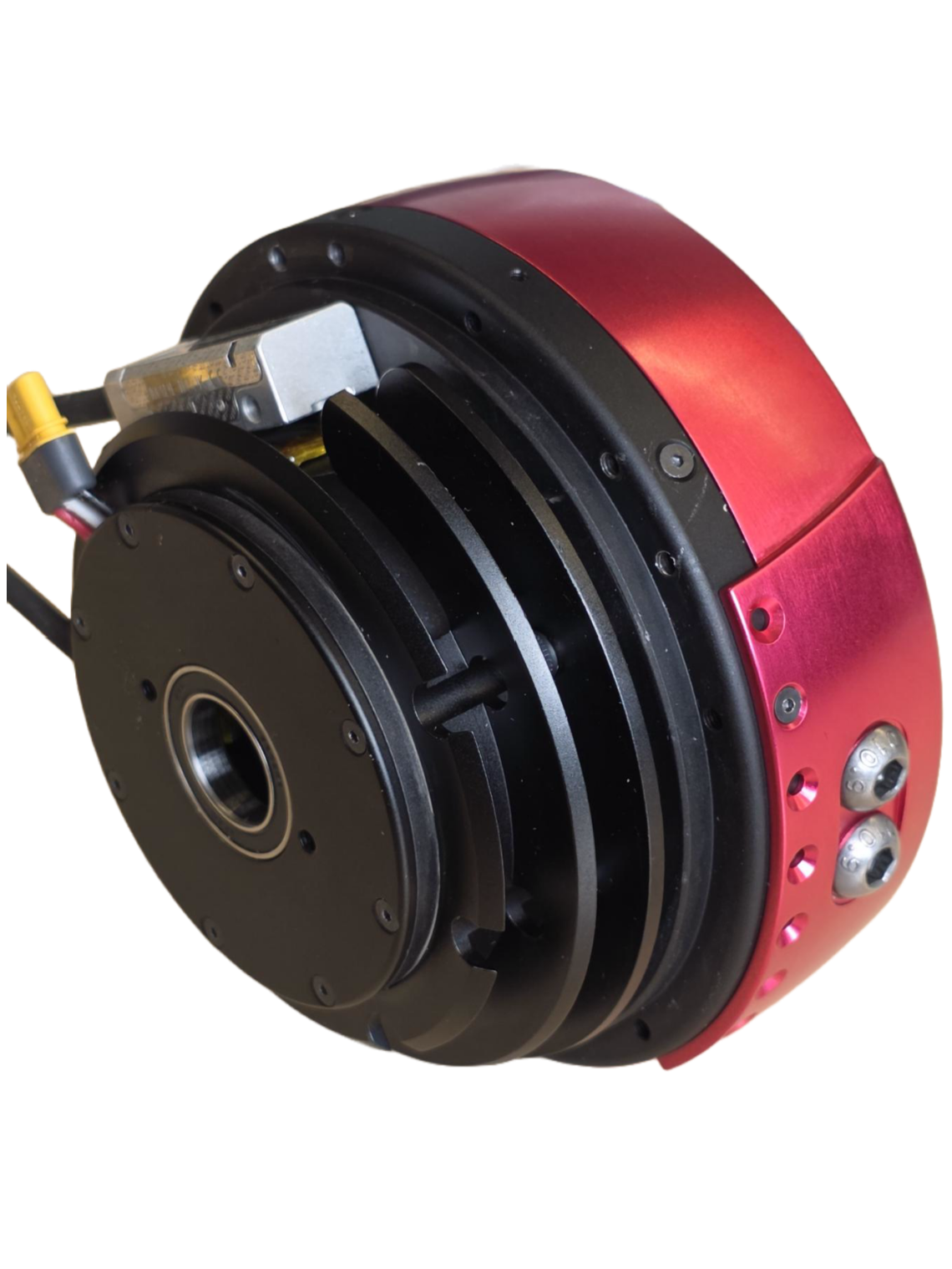
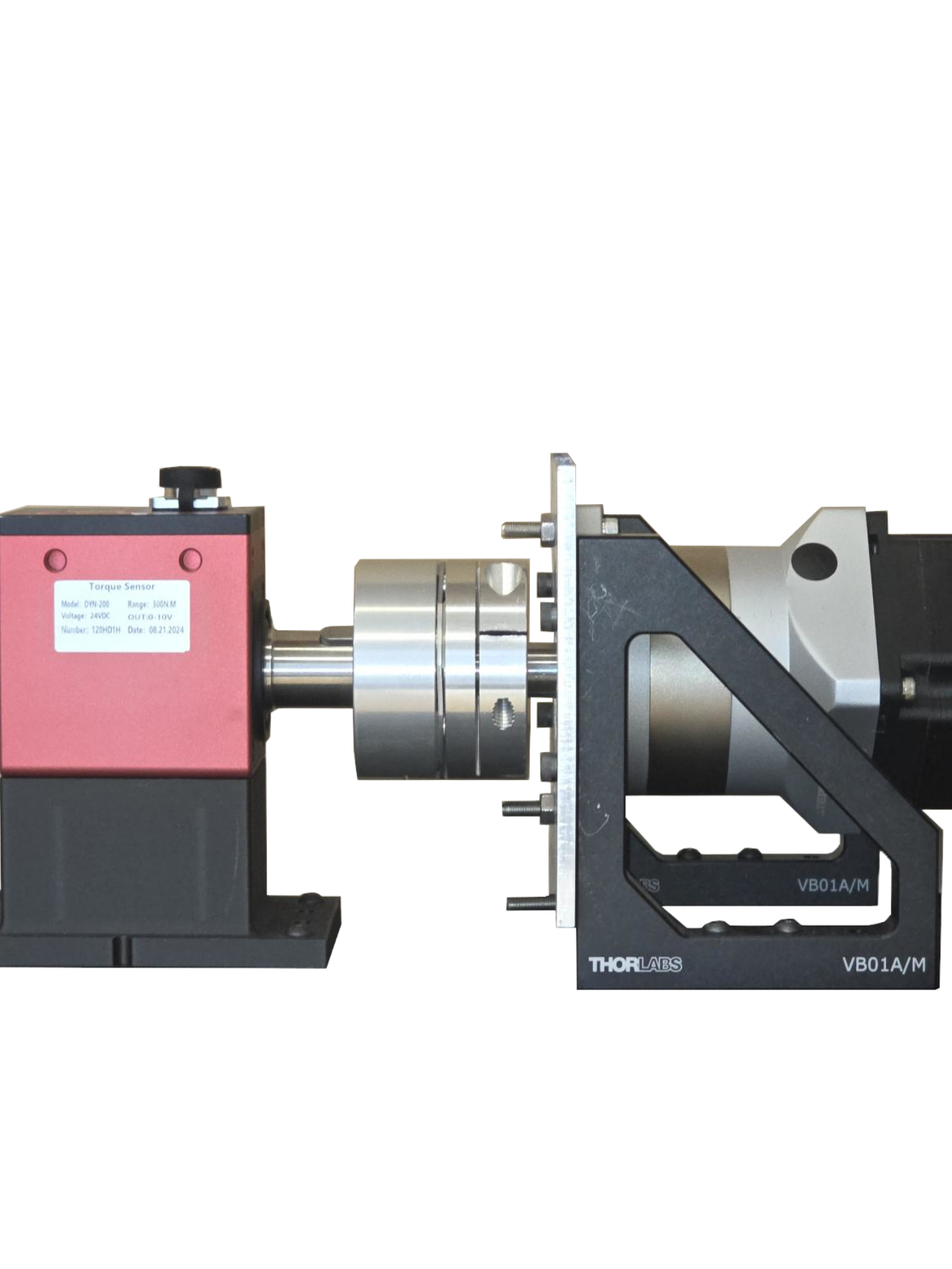
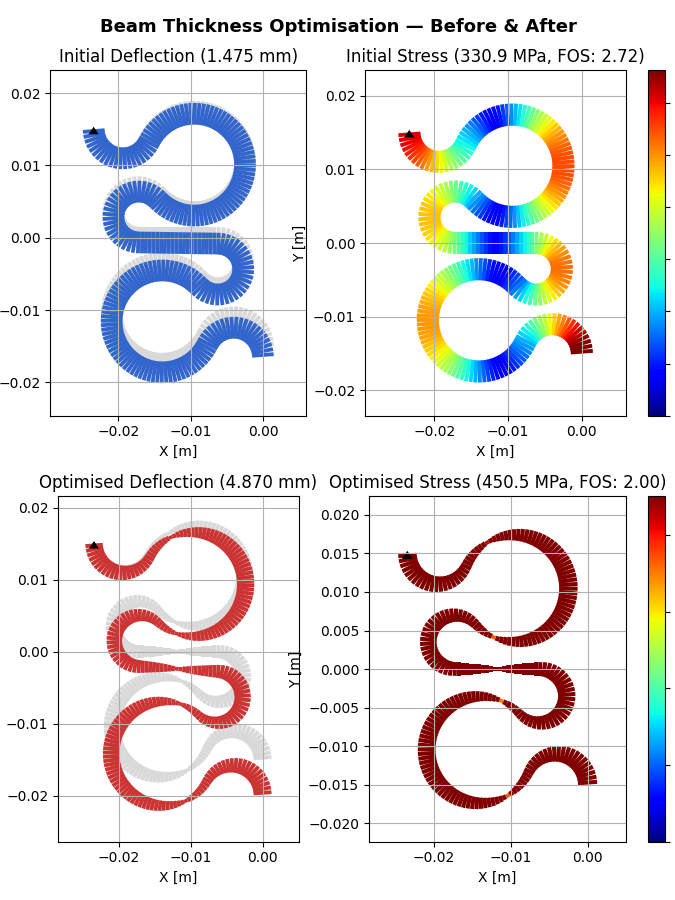
Indoor climbing is growing fast, and so is the research around it, but the tools haven't kept up. Roughly 15 instrumented climbing wall systems have been built since 1997, and every one of them is limited to a handful of holds and a narrow set of sensors. None can capture force and motion data across a complete climb. I reviewed 20+ years of climbing biomechanics literature and designed a full-scale instrumented wall to close that gap: force sensing at every hold combined with motion capture, using the Tension Board 2 hold pattern so results tie into an existing dataset of graded climbs.
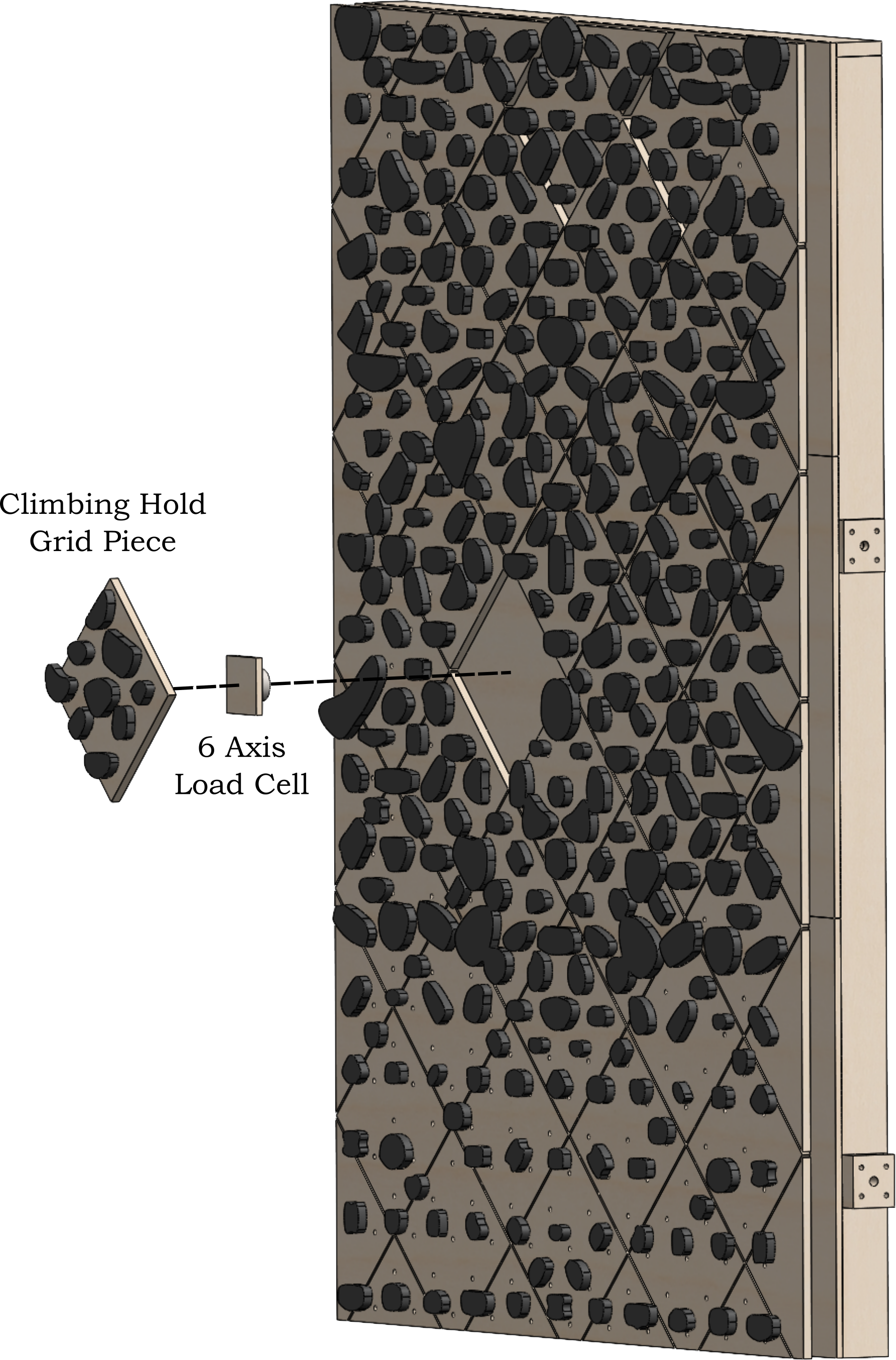
This climbing wall is capable of reaching angles of -10 degrees (slab) to +60 degrees (extreme overhang). It uses two electromechanical pistons to raise and lower the wall, with a factor of safety such that three 200lb climbers could hang off the top at the worst loading condition. It will be mounted directly into the floor of our lab space, and will only cost $16k.
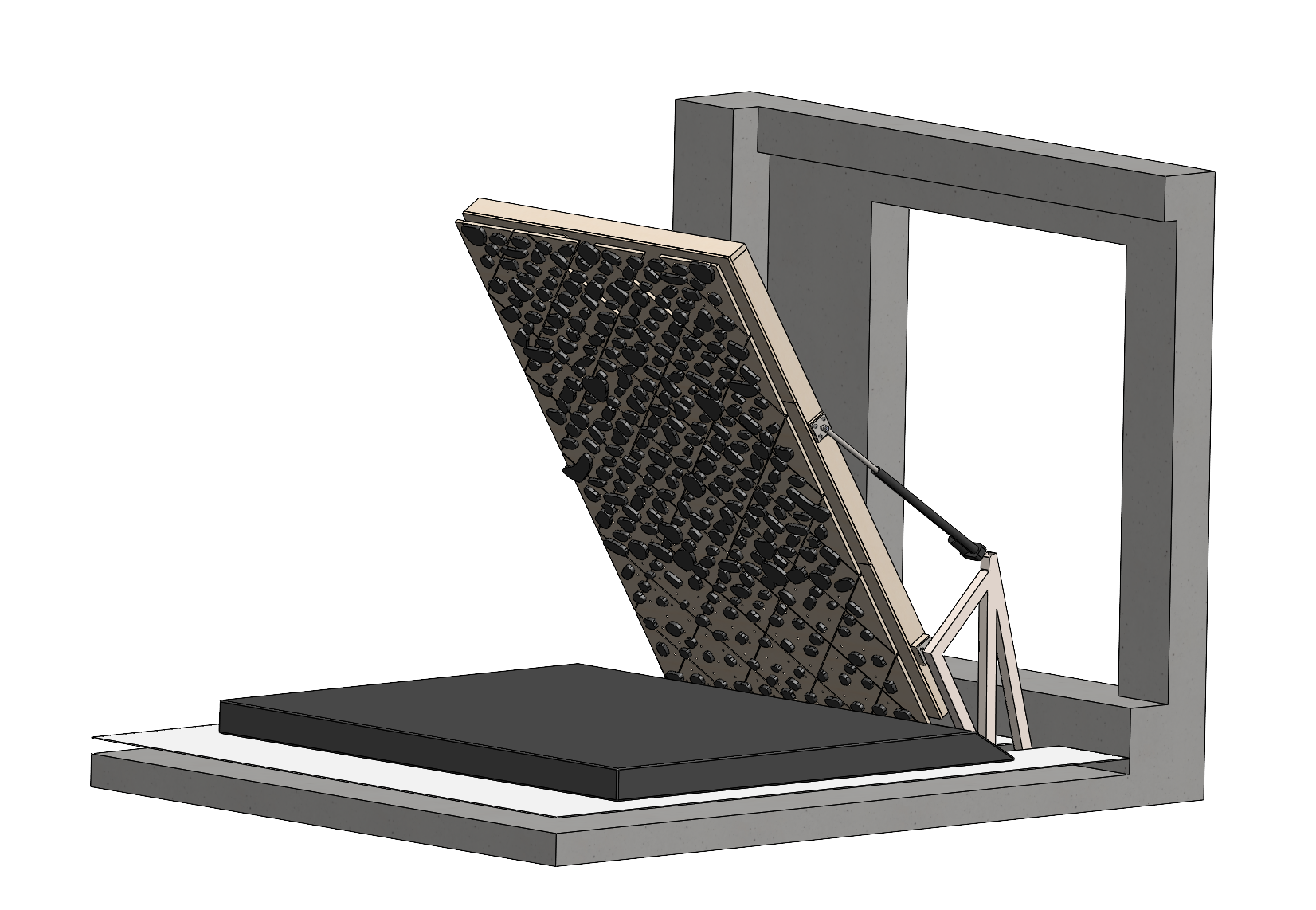
The climbing wall is broken into a diagonal grid, each of which contains roughly 9 holds. Each piece of the grid will be mounted to a 6-axis load cell, which will measure ground truth kinetics for each hold on the board. Rather than instrumenting every hold, which would be prohibitively complex and expensive, this allows us to support a large number of climbs, as we can get independent sensor data from any climbing route that only uses one hold from each piece of the grid.
Research directions the testbed enables:
1. Friction cones at the hands and feet provides the first empirical look at how climbers learn to load a hold without slipping, and a potential objective benchmark for climbing shoe rubber and shape.
2. Objective route grading can be done by training a difficulty model on body position and force data instead of hold layout, so it generalizes beyond a single board and can be deployed via computer vision in gyms or outdoors.
3. Motor learning can be studied by tracking center of mass and dynamic stability across repeated attempts to understand why climbers retain a route so effectively once they've sent it.
4. Ground truth for vision-based coaching tools requires accurate force and position data to validate what current camera-only systems can only estimate.